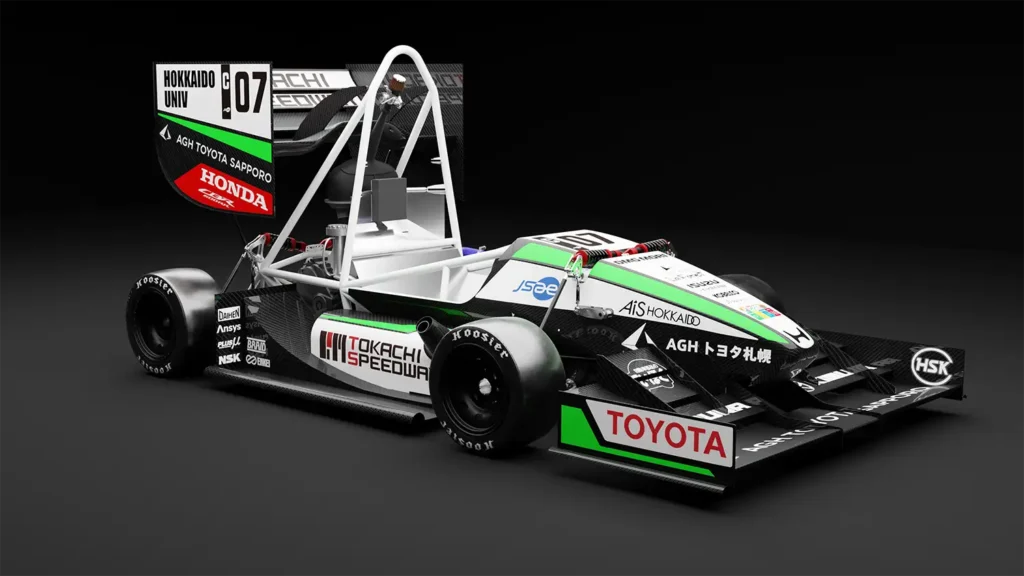
The “FH-20,” a new car developed this academic year by the Hokkaido University Formula Student Team, is an ambitious project that achieved “significant weight reduction” compared to last year’s model and dramatically improved the vehicle’s handling performance.
Its potential is clearly evident in the results of on-track testing. During a skid pad test session—which measures cornering performance—the team recorded an astonishing time in the “4-second range,” which, though unofficial, would have placed them among the top four at last year’s national championship. Furthermore, it is particularly noteworthy that “there was little variation in lap times among the drivers.”Behind the elimination of peakiness and the achievement of high maneuverability—which allows anyone to push the car to its limits—lies meticulous engineering based on data and actual measurements. In this article, we will delve into the design philosophies of each department, including the latest specifications such as the newly added LSD.
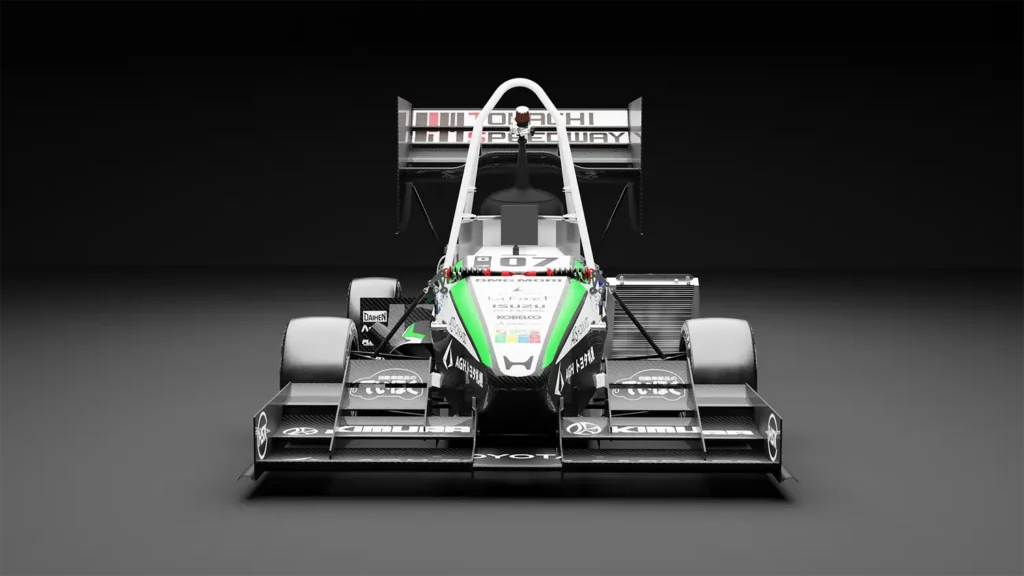
1. Powertrain (Engine, Intake and Exhaust, Cooling, Drivetrain)
To ensure that engine power is reliably transferred to the road surface, a new Drexeler LSD (limited-slip differential) has been introduced into the drivetrain. In conjunction with this, the differential mount has been redesigned based on calculated load requirements to achieve thorough weight reduction.
In the intake system, while retaining the variable intake system that proved effective during acceleration and other conditions, the plastic intake manifold—previously secured with 32 bolts—has been replaced with a carbon-fiber version, achieving significant weight reduction and an efficient design.
For the exhaust system (silencer), acoustic analysis using MATLAB was employed to optimize transmission loss and the amount of glass wool, achieving a balance between sound-deadening performance and weight reduction.
Additionally, the oil pan features a new design with a reduced height and thinner walls, evolving into a structure that lowers the engine mounting position to promote a lower center of gravity (concentration of mass).
2. Chassis and Body
The chassis, which connects the driver to the car, also clearly reflects our approach to lowering the center of gravity and reducing weight. To improve visibility
—an issue from last year—we conducted mock-up tests to adjust the driver’s seating position (line of sight). As a result, we downsized the front section of the frame, achieving a lower moment of inertia.In the analysis of the entire frame, we met the demanding goal of “ensuring greater rigidity than last year while reducing weight by more than 1 kg.”
Additionally, one factor contributing to reduced lap time variation is the optimization of the urethane seat to perfectly fit the driver’s physique.This uncompromising pursuit of human interface design results in stable drivability.
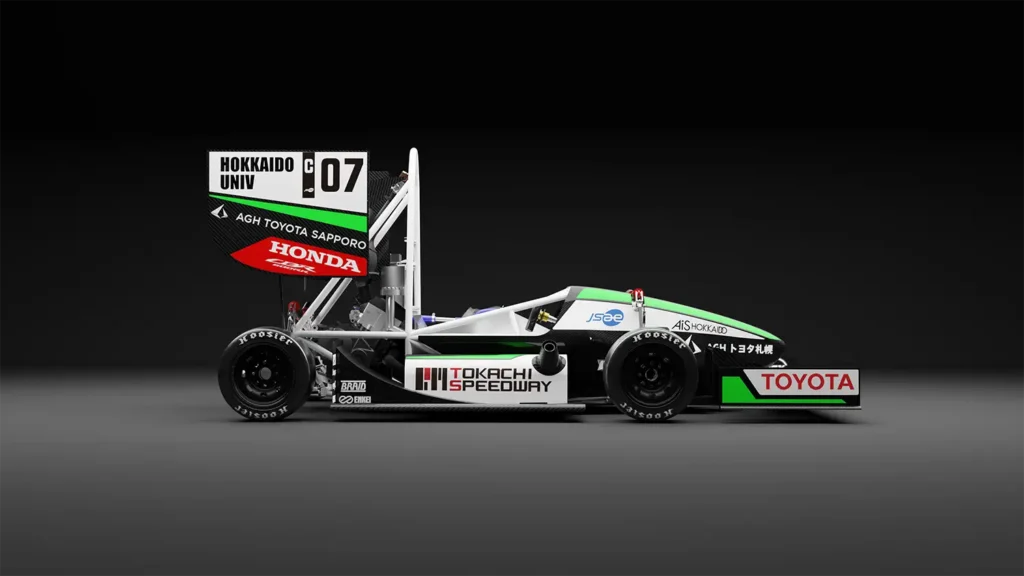
3. Suspension and Steering
Building on the excellent suspension geometry that secured first place in last year’s autocross competition, minor modifications were made using more precise analysis. For
the front suspension, the position of the hoop was adjusted to optimize the front-to-rear balance of the load on the upper arms. The shape of the bell crank was also modified to improve the adjustment mechanism and rigidity.
Regarding the hubs and uprights, a more realistic simulation incorporating bearing loads was utilized to achieve significant weight reduction. Furthermore, for the stabilizer bar, a solid approach grounded in theory and data was consistently applied—for example, the material was changed based on last year’s actual measurement data to ensure the yield point was not exceeded.
4. Aerodynamics
Regarding the aerodynamic package, plans initially called for a complete overhaul, including a new front wing featuring the “S1223” airfoil and a new floor design incorporating side intakes.However, due to the tight production schedule leading up to the race, it was determined that the new parts would not be ready in time; consequently, the team switched to an approach of modifying last year’s aero parts in detail and deploying them in the actual race.
As a result, by leveraging the reliability of last year’s proven parts while fine-tuning the overall balance of the car, the aerodynamic package effectively supports the car’s remarkable cornering performance, achieving a skid pad time in the 4-second range.
Toward the 2026 Formula Student Japan Championship
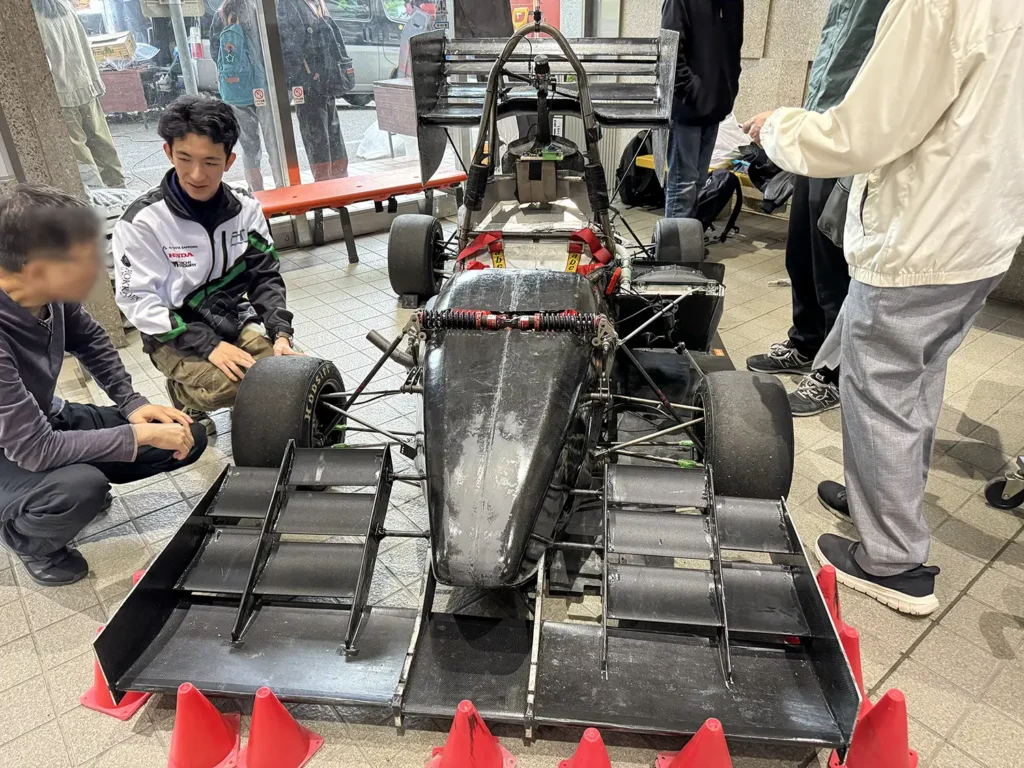
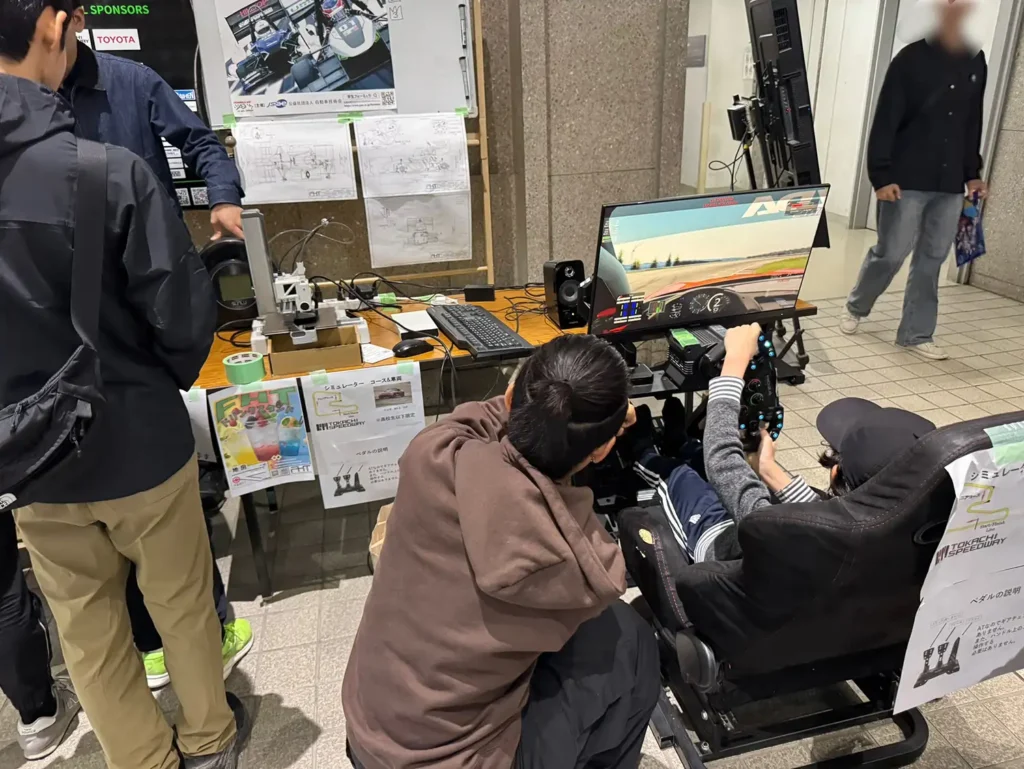
Actually, this past June, I visited “Hokudai Festival,” the university festival held at Hokkaido University. The Student
Formula team had a booth there as well. With
exhibits featuring race-spec cars and cockpit experiences, a Formula Student simulator challenge, and a drink stand modeled after a gas station, the event was bustling with people.


I asked them about their preparations for the race, and—perhaps thanks to last year’s results—they were highly motivated, and everyone seemed confident in how their machines were shaping up.
As for that tournament, it will be held in August this year—a month earlier than usual.
It’s sure to be a battle in the sweltering heat.
I look forward to seeing the team continue to excel.
[Reporting, Writing, and Photography]
The mono-think Editors
A web media outlet that explores the cutting edge of Japan’s “manufacturing” and “infrastructure” from the perspective of active IT engineers, offering a unique perspective.
[Research Cooperation & Related Links]
Formula SAE Hokkaido Team
Formula Student Japan Official