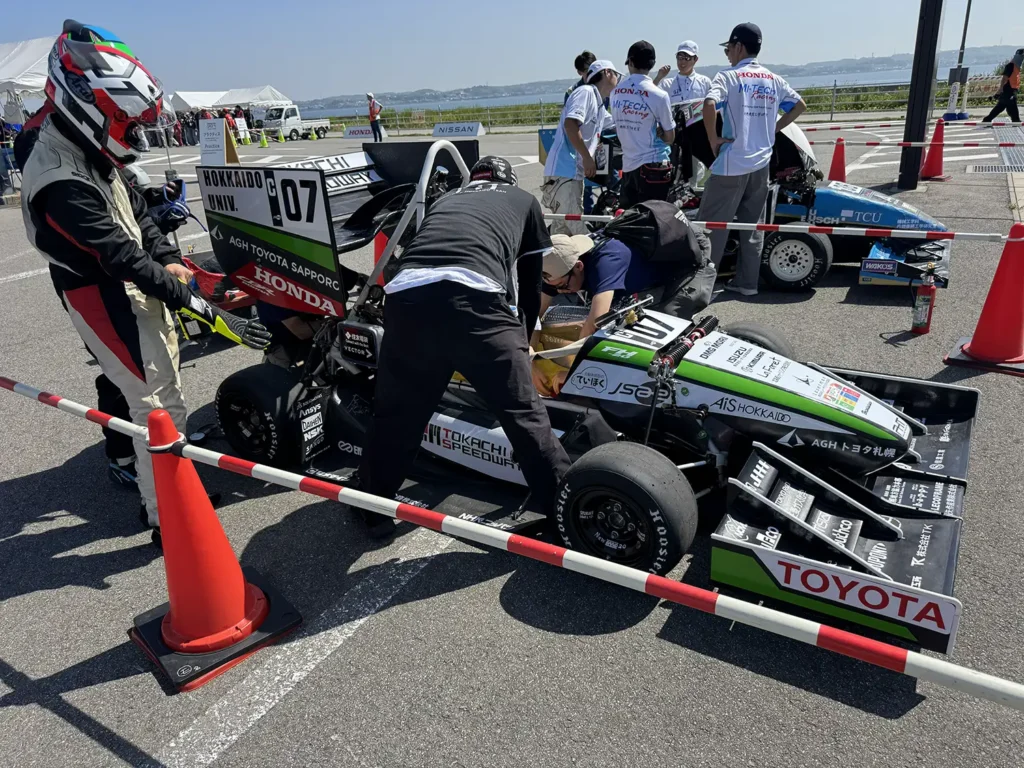
At the 2025 competition, the Hokkaido University Formula Student Team recorded the fastest time in the ICV (internal combustion engine) class in autocross, catapulting them into the role of dark horse. They brilliantly overcame the challenge of being based in the remote region of Hokkaido and have finally joined the ranks of the nation’s top teams.
Now, as the 2026 competition approaches, their goal is, quite simply, “to win the dynamic evaluation.” This article reports on the intense competition.
Machine Overview and Design Philosophy
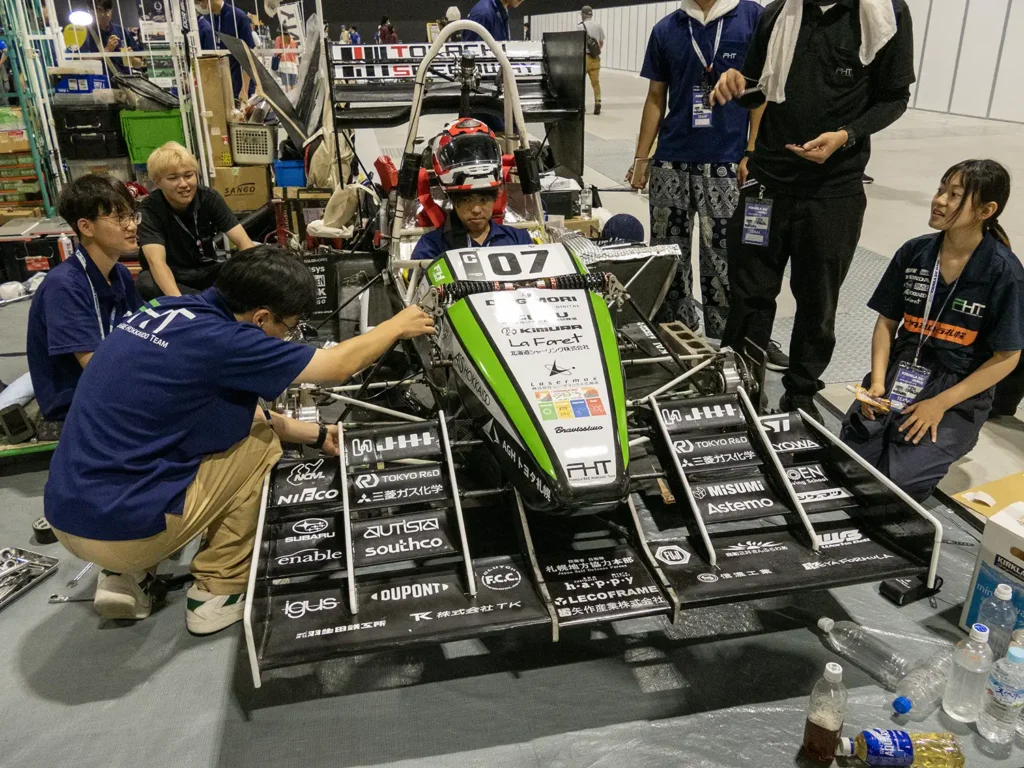
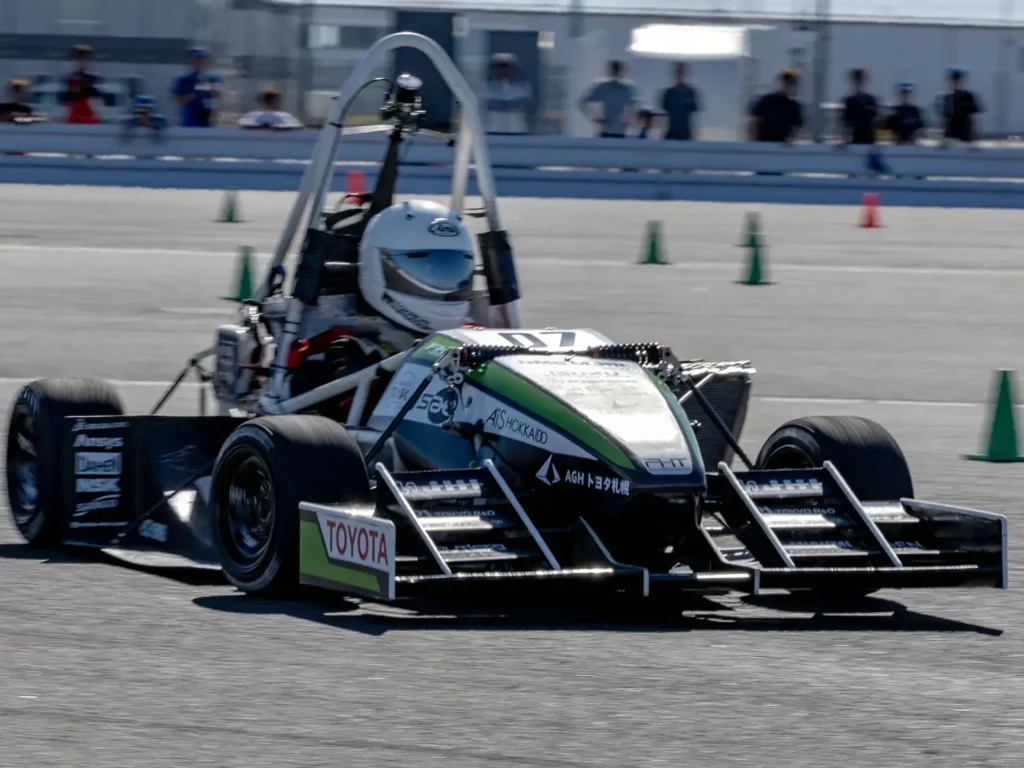
The new “FH-20” machine introduced by the Hokkaido University team this season is an ambitious project that pursued thorough “weight reduction” and a “lower center of gravity” based on data and actual measurements.
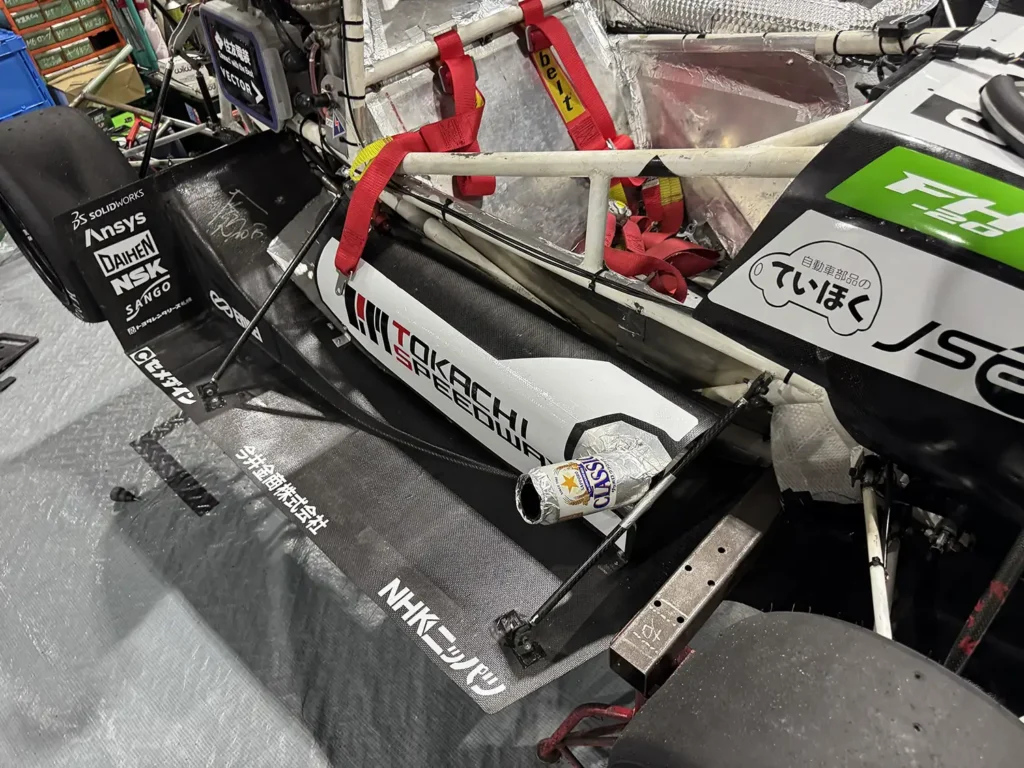
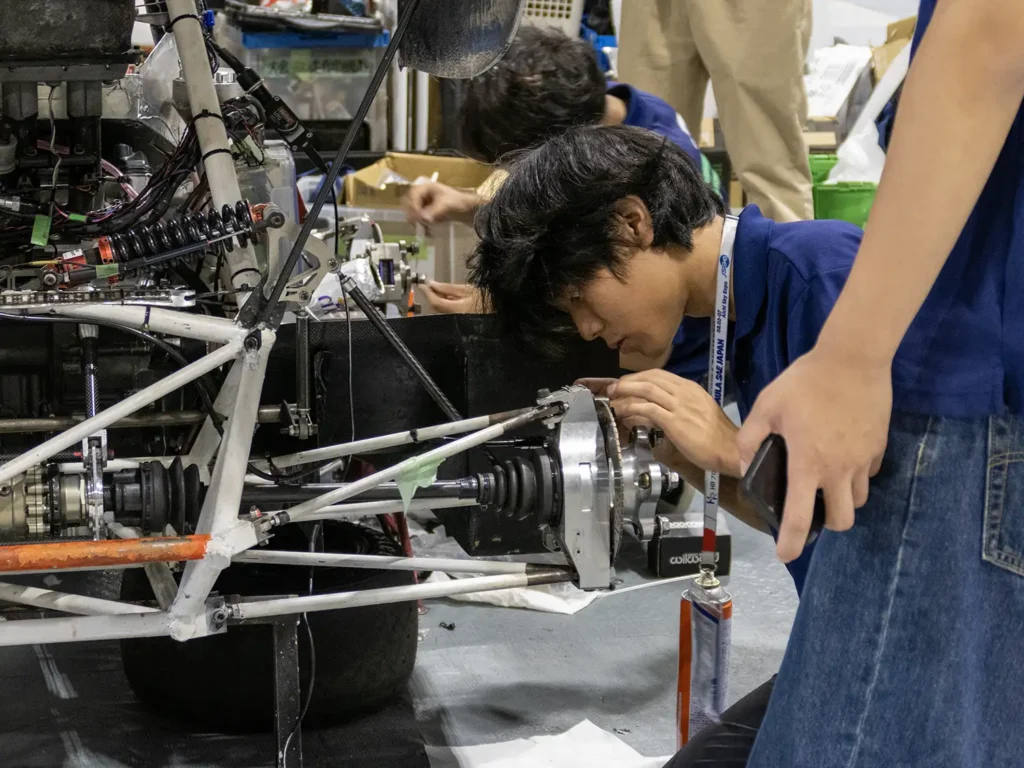
It is powered by a Honda CBR600RR engine and features a newly adopted LSD (limited-slip differential) this season.Thanks to a newly designed differential mount tailored to this system and an ultra-thin oil pan, the bike achieves a high level of balance between极限 performance and handling stability. Furthermore, weight reduction across various components—including the cockpit area and suspension—has eliminated any tendency toward being too twitchy, resulting in a machine that “allows anyone to push it to its limits.”
Regarding aerodynamic parts, due to scheduling constraints, the team adopted an approach of optimizing the overall balance of the bike by deploying last year’s proven aero parts with minor modifications (adjustments) for competition.
Tournament Results
Static Review
- Design: 4th Place
- Presentation: 16th place
- Cost: 29th
Dynamic Review
- Acceleration: 3rd place
- Skid Pad: 3rd Place
- Autocross: 2nd Place
- Endurance: 15th place
- Efficiency: 9th place
Top 3 Best View Award: 1st
Place; Overall Rank: 7th; Dynamic Judging Rank
: 8th
Status of Static Review
According to the leaders’ summary following the competition, the results of the static judging turned out “more or less as expected.”
Of particular note was the major breakthrough of placing fourth in the “Design Evaluation.” Last year’s strong performance proved that the design direction was correct, which significantly boosted the members’ motivation. Furthermore, starting this year, the members actively applied development processes such as the “V-model” and the “PDCA cycle” to their design process, which directly contributed to this outstanding result.Regarding the
presentation evaluation, the effects of the meticulous preparations made since last year were evident, and the team felt a strong sense of confidence.
On the other hand, in the cost evaluation, the team struggled because they were unable to prepare sufficiently due to having concentrated their resources on vehicle production. The team is calmly accepting this as a “setback” that was within their expectations.
Passed the Brake Test by the Skin of My Teeth
While the top contenders aiming for the overall championship were smoothly passing their vehicle inspections, the Hokkaido University team faced unexpected difficulties during the brake test. The cause was a problem with the Wilwood brakes the team was using; the resulting deterioration in brake feel prevented the driver from achieving the intended balance of pedal pressure.
In fact, this brake is a part that has been in continuous use since last year; although there were some minor issues last year, they weren’t critical, and it had been functioning perfectly without any problems right up until just before this year’s competition. Unfortunately, the malfunction surfaced on this big stage, but the incident highlighted an issue with the team’s “parts mileage management.”
In the end, they didn’t pass on the first try and had to carry it over to the next day. Back in the pits, they thoroughly bled the brake fluid, replaced brake components, and readjusted the system.
Then, during the retest the next day, the driver’s careful braking paid off, and they managed to meet the passing standards. It was such a nail-biting experience for the team that the driver even admitted, “I was nervous,” as he stepped out of the car.
Status of Dynamic Review
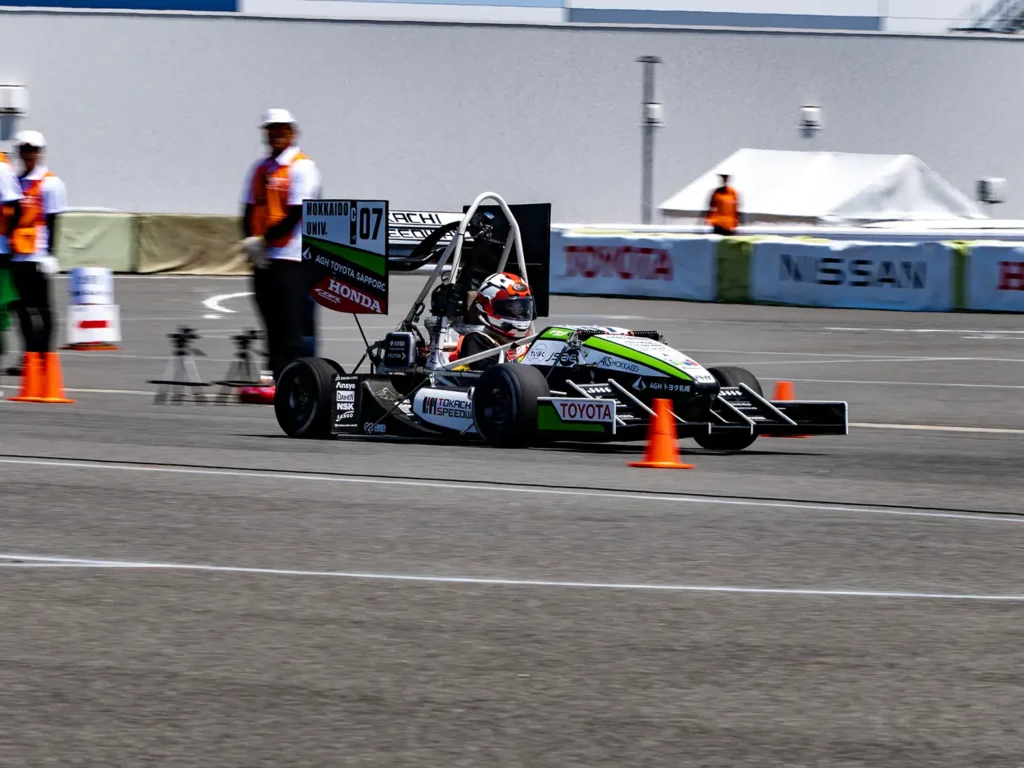
The dynamic review began. A steady battle unfolded as the team aligned the pre-test data with the on-site environment.
First, in terms of acceleration, they narrowly missed their target of “under 4 seconds.” However, they were able to consistently deliver the performance expected from their preliminary test runs, and the team expressed satisfaction that they had achieved a solid result.
Next up was the skid pad. Although the car posted excellent times in preliminary testing, the team was unable to fully adapt to the unexpected conditions and differences in track surface that are unique to the actual race, and thus did not achieve the best result the team had hoped for. However, the data clearly shows that performance has improved since last year.
And in the highly anticipated autocross event, the team’s strategy and adaptability shone once again this year. They flawlessly executed the same strategy as last year, in which the driver in the first run focused entirely on fine-tuning the car’s setup, and that feedback was then passed on to the experienced second driver. The most
dramatic moment came during the final run.Since the outside temperature and track conditions resembled those during test runs at their home base in Hokkaido, the team immediately adjusted the car’s setup to suit those conditions. This proved to be spot-on, and they recorded an impressive best time. Although they unfortunately had to concede the top spot to Doshisha University, they maintained solid results across all events and demonstrated their strength at the decisive moment.
A Turbulent Endurance Test and an Indomitable Finish
The endurance test—the final event of the competition—puts the machines’ overall performance and reliability to the test. However, this year’s endurance test got off to an unprecedentedly turbulent start.
Due to two vehicle fires involving other teams during the event, the schedule was significantly shortened. As a result, the format was abruptly changed to an unusual, sprint-style format in which “two drivers took turns completing five laps each.”
But that wasn’t the only challenge. Just before the race, all teams were suddenly required to undergo a strict “additional technical inspection” of their engines. Initially, the inspection included standards so strict they could be called unreasonable, and it appeared that many top teams—including Hokkaido University—might lose their right to compete if the standards were enforced as written.In response, there was a tense moment when representatives from several teams lodged fierce protests with the organizers, but the Hokkaido University team managed to pass the additional inspection. Through sheer determination, they made it to the starting line.
After entering the track, the first driver benefited from the finely tuned setup, completed several laps at a strong pace, and returned to the pits. The outcome of the race was now in the hands of the second driver.
However, immediately after leaving the pits, the car was struck by a devastating mechanical failure.The rear wing, which should have been generating immense downforce, suddenly detached. As a result, the orange-and-white checkered flag was waved, forcing a frustrating emergency pit stop.Fortunately, after a quick inspection, the car was able to return to the track; however, having lost its rear downforce, the car struggled to maintain traction, forcing the driver to navigate under extremely unstable conditions.Although there were some close calls
along the way—including a spin—the driver used his innate skill to forcefully tame the erratic car and safely brought it across the finish line.
We may have fallen just short of winning the “Dynamic Inspection” in peak condition.However, overcoming unexpected schedule changes, unreasonable additional vehicle inspections, and the near-fatal loss of a part while driving in the midst of a typhoon—this “finish,” achieved by overcoming all these adversities, served as a dramatic finale that proved the Hokkaido University team’s true strength and indomitable spirit.
[Reporting, Writing, and Photography]
The mono-think Editors
A web media outlet that explores the cutting edge of Japan’s “manufacturing” and “infrastructure” from the perspective of active IT engineers, offering a unique perspective.
[Research Cooperation & Related Links]
Formula SAE Hokkaido Team
Society of Automotive Engineers of Japan