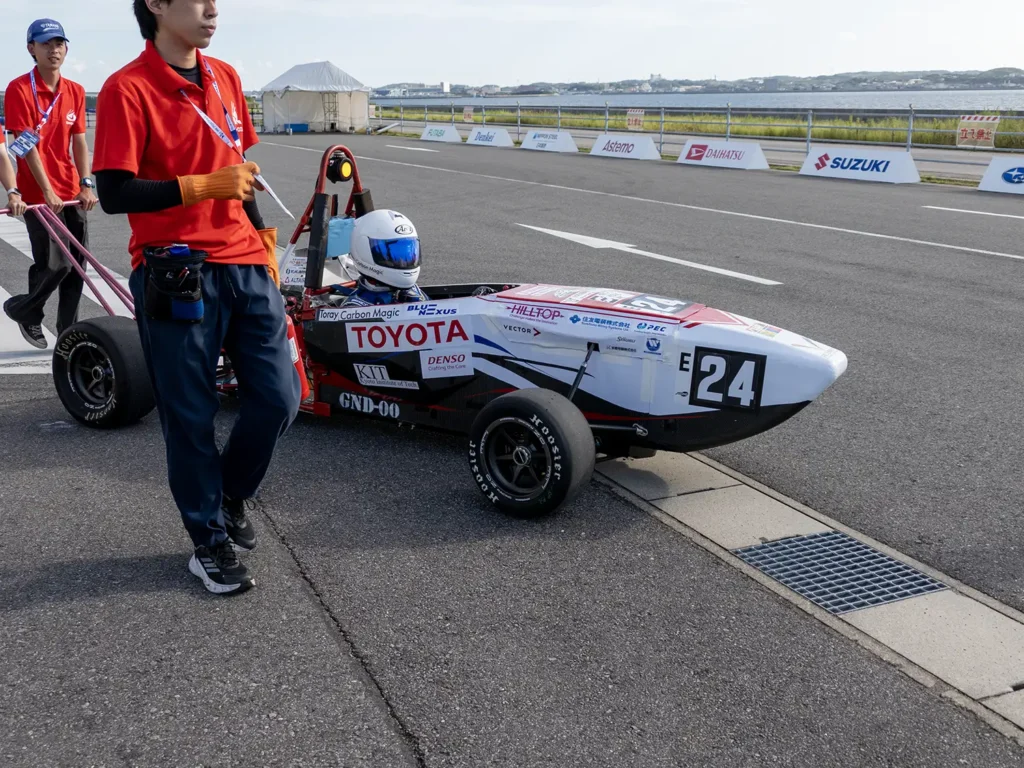
At the Student Formula Japan competition held in August 2026, the Student Formula team from Kyoto Institute of Technology entered both the traditional ICV (internal combustion engine) class and the EV class.
Although the EV division consisted of a small but elite team of just five members, their challenge—marking the first time a championship-winning team had competed in the EV class—drew intense attention from both within and outside the university.
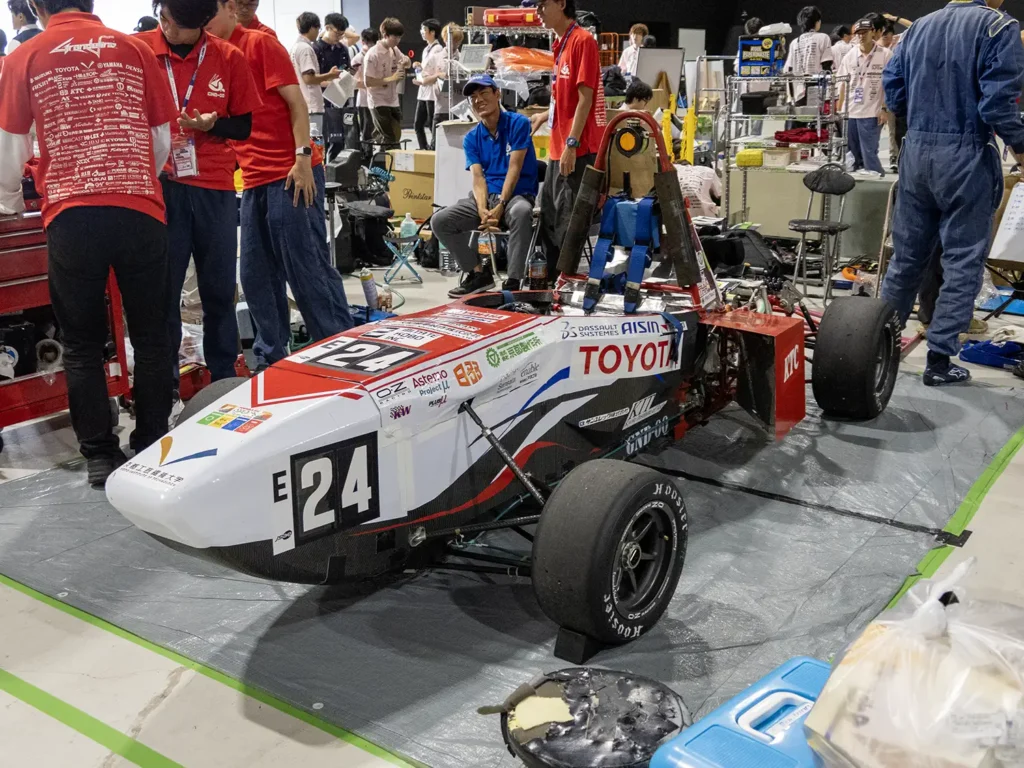
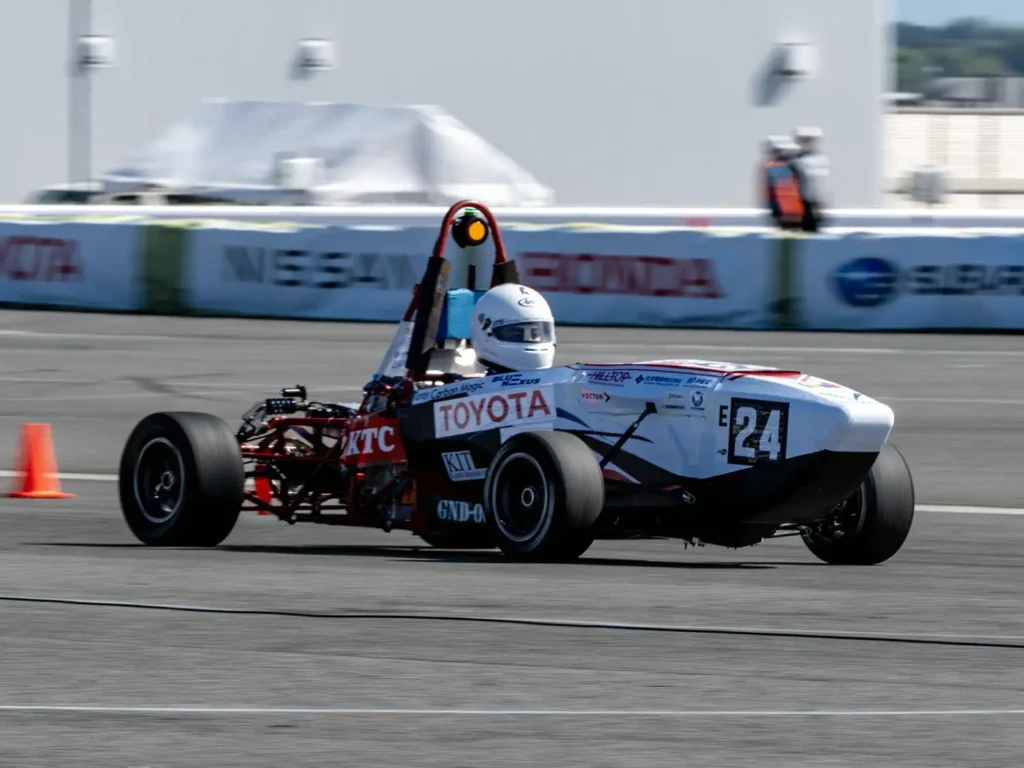
Here is a summary of “GND-00,” the historic first-generation EV class car.
Vehicle Basics: Rational Chassis Design and Advanced Development
- Monocoque: To shorten the development period and reduce production costs, the carbon monocoque used in the previous fiscal year’s (FY 2025) ICV machine, the “GDF-20,” will be reused.
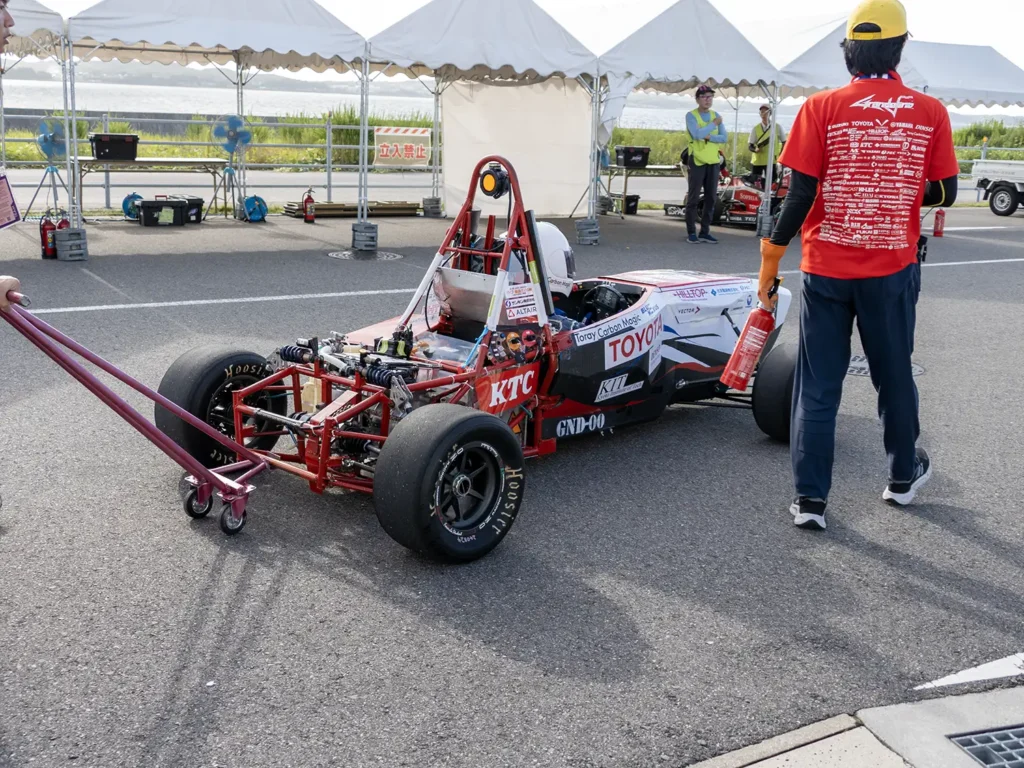
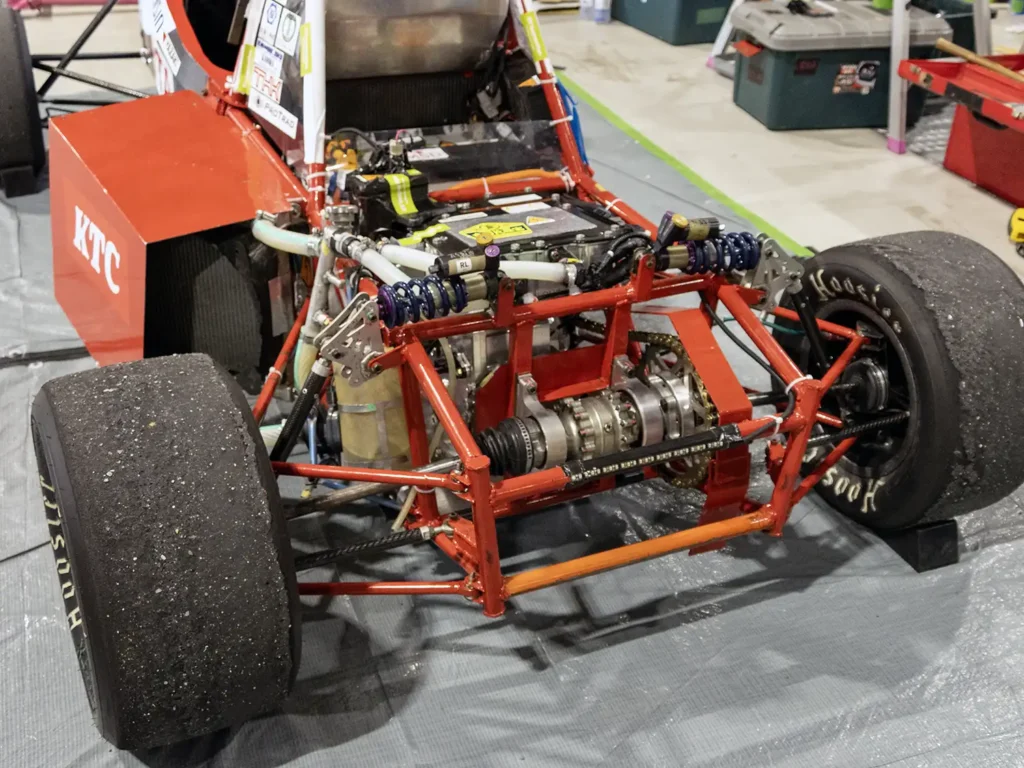
- Rear Frame: To accommodate EV-specific components—such as the TBC (Tractive System Battery Container) and motor unit—in accordance with regulations, a new rear frame was designed and manufactured to ensure reliability when paired with the adapted monocoque.
Powertrain and EV Systems: Robust Support and High-Voltage Systems
- Motor Unit: After evaluating factors such as output, weight, and ease of installation, the vehicle was equipped with a motor unit provided by Toyota Motor Corporation, Denso, Aisin, and Blue E Nexus.
- Battery: Equipped with a battery provided by Toyota Motor Corporation to support the Student Formula program
- System Voltage: The circuit employs a high-voltage system with a voltage of 400 V.
- Battery Case: We designed and manufactured a new “TBC (Tractive System Battery Container),” a dedicated case for housing the battery.
Evaluation of the Tournament and Future Outlook
Compared to other teams in the inaugural year of the EV class, the “GND-00” stands out for its extremely low profile and the simple, compact design of its EV-specific systems, auxiliary components, and motor unit.
This excellent packaging has served as a benchmark for teams considering a transition from ICV to EV in the future.
Incidentally, although their goal for this year’s competition was the modest one of “passing technical inspection,” the car demonstrated extremely high reliability during actual runs and delivered a remarkable performance, competing for a spot in the second group despite this being the EV class’s inaugural year.
Next year, all eyes will likely be on whether Kyoto Institute of Technology can join the top group—which includes Nagoya University and Nagoya Institute of Technology, both contenders for the EV class championship.
[Reporting, Writing, and Photography]
The mono-think Editors
A web media outlet that explores the cutting edge of Japan’s “manufacturing” and “infrastructure” from the perspective of active IT engineers, offering a unique perspective.
[Research Cooperation & Related Links]
Kyoto Institute of Technology, Grandelfino
Society of Automotive Engineers of Japan