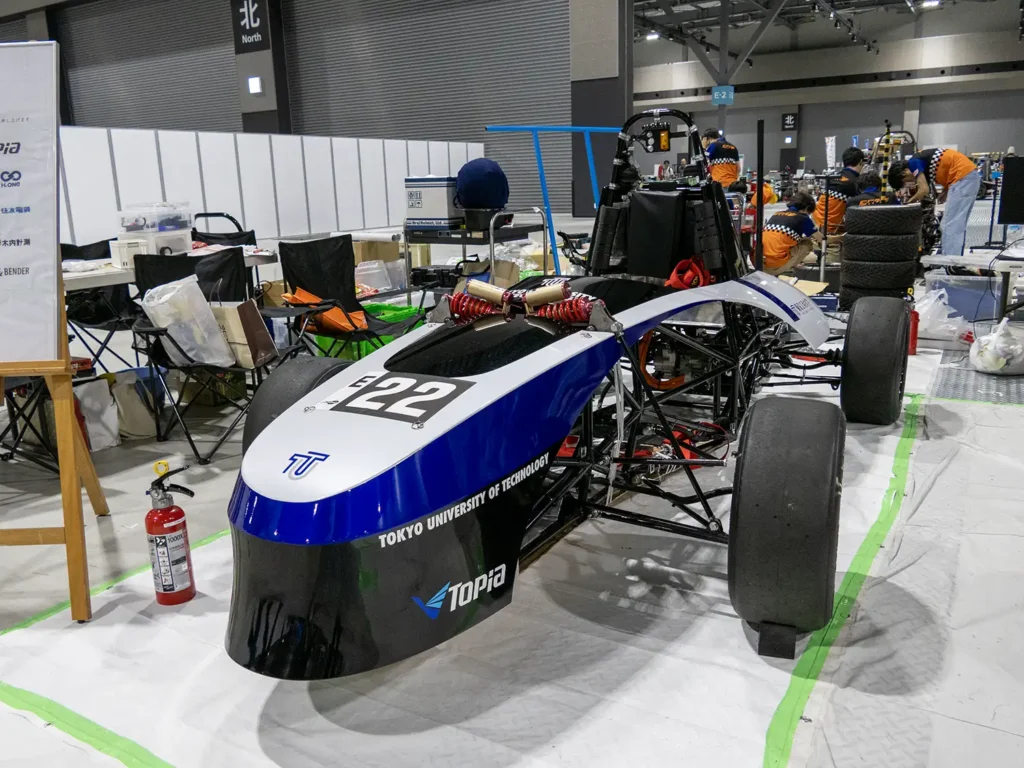
The venue for the Formula Student 2026 Japan Competition (August 2–7, 2026) was filled with the excitement and nervous anticipation of the students as they prepared to take on this once-a-year showcase.In recent years, the “dynamic evaluation”—which focuses on lap times and driving performance—has been the top priority in Formula Student, and many teams have centered their development efforts on “how to build a car that’s both fast and stylish.”
However, amid the frenzy of excitement, the approach of the Tokyo University of Technology Formula Student Team—whom I spoke with directly—stood out from the crowd. Their goal is not merely to pursue speed in a racing car.Instead, they employ a “manufacturing” methodology identical to that used in corporate production facilities: thoroughly finalizing product planning and concepts in advance, and then designing and developing the actual vehicle based on that product design.
Although we unfortunately missed the on-track qualifying for this competition, we brought our car to undergo technical inspection in order to gain valuable experience for next year.
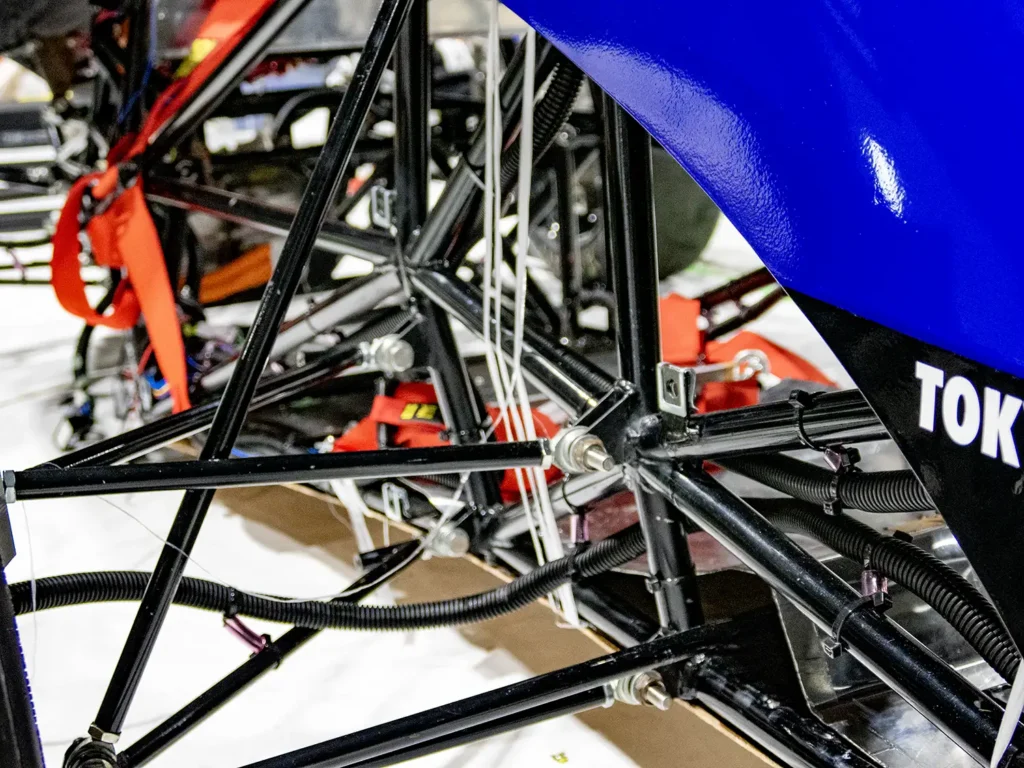
A Cross-Disciplinary Team and Real-World Challenges Encountered at Vehicle Inspection Sites
The car on display at the venue was beautifully finished down to the finest details, and it struck me as being in a league of its own compared to conventional formula student cars.
The Tokyo University of Technology team is developing a machine as a single product, drawing on students with diverse backgrounds—primarily from the School of Engineering but also including students from the School of Design and other departments.While many teams tend to prioritize the dynamic evaluation and treat the static evaluation (such as design, cost, and presentation) as an afterthought or a way to make the numbers add up, this team is taking an approach to the static evaluation, design, and engineering that closely mirrors the way companies operate once the students enter the workforce.
These initiatives are educational processes that are routinely implemented in Formula Student programs in Europe and the United States, and they represent the true essence of developing talent that is immediately ready for the workforce. However, putting them into practice presents unique challenges specific to the field.By participating in this competition and actually undergoing the rigorous “vehicle inspection,” the team was confronted with real-world challenges.
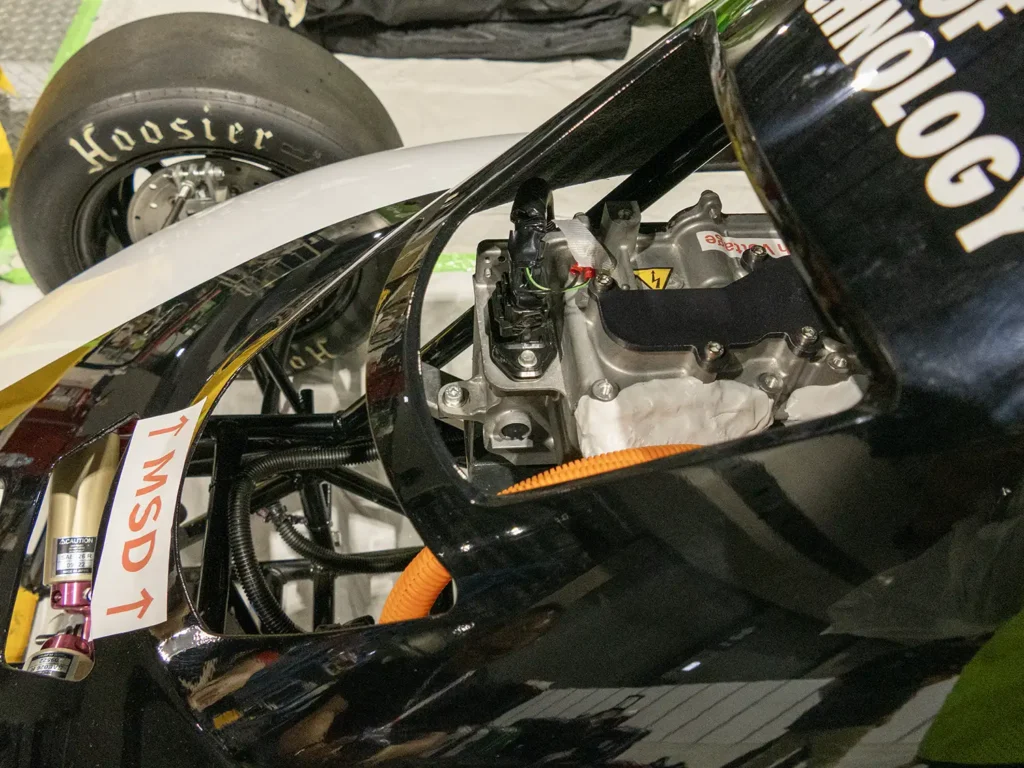
Issues That Came to Light During the Vehicle Inspection
First and foremost, we keenly felt our lack of understanding regarding vehicle inspections and regulations. Since we had few core members leading the design effort, we struggled to engage in dialogue and negotiations with vehicle inspection officials on an equal footing, based on the regulations.
Furthermore, many team members were unfamiliar with tasks such as machining and manufacturing, and we were once again reminded of the challenges of handling both design and production end-to-end with such a limited number of people.
The team gained experience that could never be obtained through theoretical calculations alone.
First, they plan to bring the car up to a fully operational (finished) state in preparation for the test drive scheduled for September, and use the success of actual on-road driving to boost the team’s motivation and morale. Through this, they hope to solidify the team’s resolve and use that momentum to recruit new members and strengthen the organization’s foundation.
“Looking ahead to next year, we want to leave a strong impression on the judges and everyone around us that we’ve taken a unique approach.“Rather than the recent trend in Formula Student where people say, ‘It’s gotten too fast’ or ‘We can see the end in sight,’ I want to design a car that, based on a business-oriented mindset, can be marketed to the market and society as a ‘product,’” he said, expressing his enthusiasm.
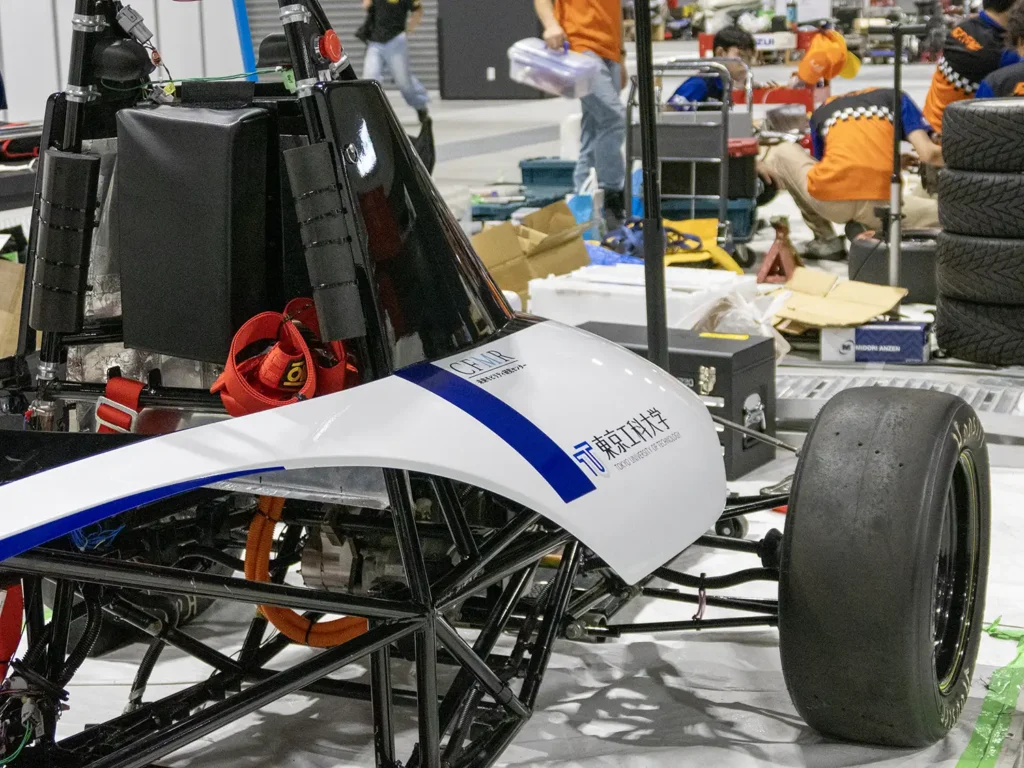
Reflection: What Is the True Nature of “Manufacturing” Workforce Development?
The essence of engineering is not simply assembling parts and competing solely on specifications and speed. It is a comprehensive process that involves understanding user needs, defining a product concept, and arriving at the optimal solution within the strict constraints of design, cost, and regulations.
Amid the hustle and bustle of the competition and the tension of the technical inspection, the Tokyo University of Technology team’s challenge is a true embodiment of the “true spirit of manufacturing” through Formula Student racing.In the Formula Student world, where the competition is becoming increasingly intense, their bold challenge is sure to have a significant impact on the future of manufacturing education and the nature of these competitions.
[Reporting, Writing, and Photography]
The mono-think Editors
A web media outlet that explores the cutting edge of Japan’s “manufacturing” and “infrastructure” from the perspective of active IT engineers, offering a unique perspective.
[Research Cooperation & Related Links]
Tokyo University of Technology Project EV.
Society of Automotive Engineers of Japan